
The Big Clean-Up & Reset: A Gentle January Guide for Your Garden
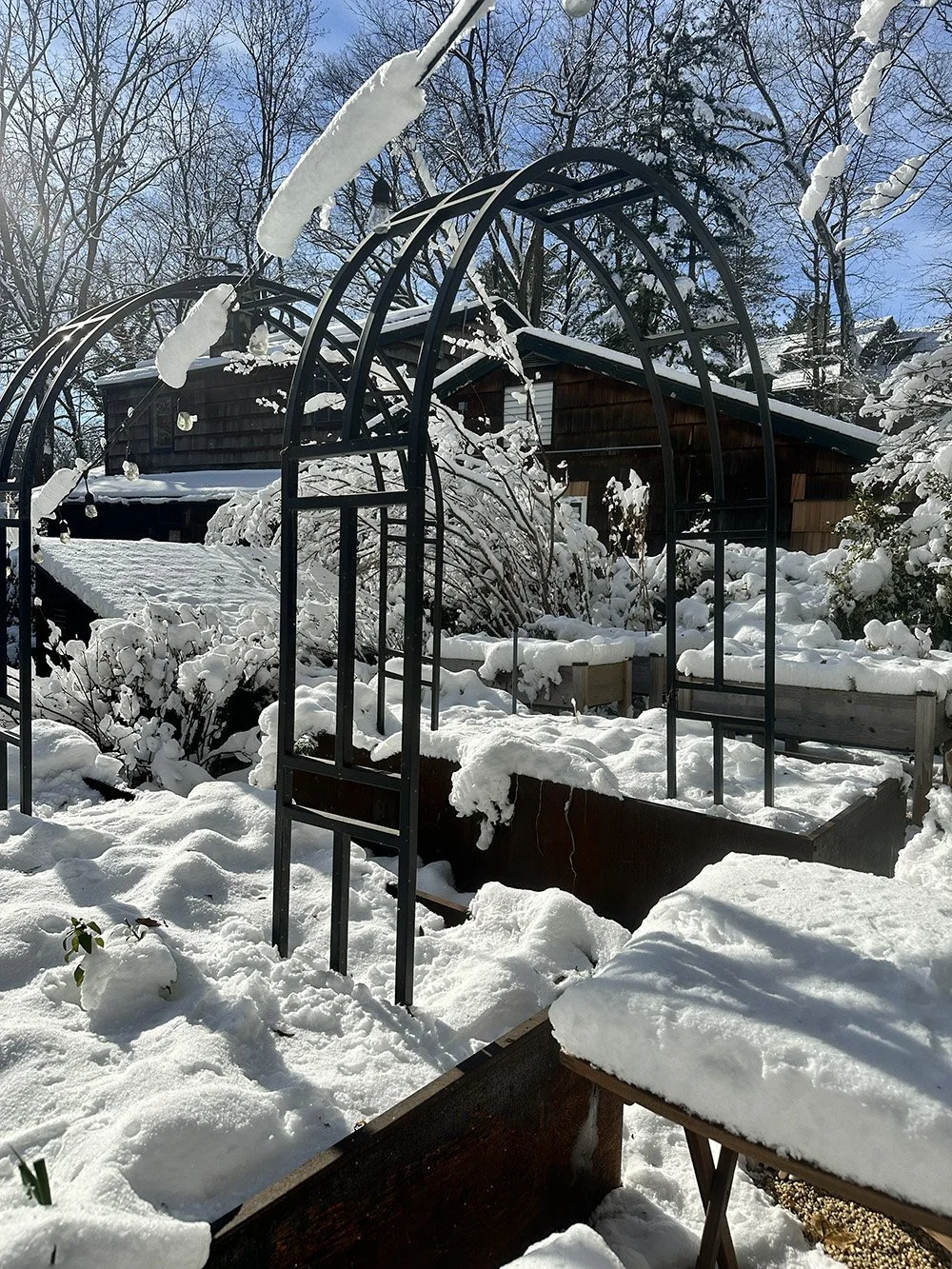
Outside, the kitchen garden is covered in snow. Beds that were once full of greens and herbs now look completely still. But beneath the surface, the garden hasn’t stopped working. Soil microbes are active. Roots are resting and repairing. Organic matter is breaking down, slowly building the foundation for what comes next.
There is a moment every January when the holiday buzz fades and what is left behind feels quiet. The tree has dropped its needles, the garland is starting to dry, the amaryllis that stole the show in December is suddenly bare. It can feel like the season is over.
Outside, the kitchen garden is covered in snow. Beds that were once full of greens and herbs now look completely still. Beneath the surface, however, the garden has not stopped working. Soil microbes remain active. Roots are resting and repairing. Organic matter continues to break down, slowly building the foundation for what comes next.
This is not an ending.
It is a reset.
January is an in-between season, one that invites us to clear what is finished, tend what is resting, and stay connected to the garden without rushing ahead.
What Is Happening Beneath the Snow
Under that blanket of snow, the soil is anything but empty. Microscopic life continues its slow and steady work. Bacteria break down organic matter. Fungi extend their quiet networks. Earthworms tuck themselves safely below the frost line.
Winter is when soil structure improves and nutrients are released gradually. The groundwork for spring is laid long before we ever see a green shoot.
The garden is not dormant.
It is preparing.
From Celebration to Soil: What to Do with Holiday Greenery
When the holidays wind down, one of the most common questions I hear is, what do I do with all this greenery now? The tree, the garland, the wreaths have done their job beautifully. They still have more to give.
If you chose a real Christmas tree or live garland, you have been working with living material all along. The goal now is not disposal. It is transition.
Christmas trees can be chipped into mulch, added to municipal compost programs, or cut into branches and laid along garden beds. Those branches help insulate soil, reduce erosion, and slowly break down into organic matter.
Live garland and wreaths made from evergreen boughs can be cut down and layered into compost piles, tucked beneath shrubs, or used as loose mulch in ornamental beds. As they decompose, they feed the soil and support microbial life through winter.
If you have the space, a small brush pile in a quiet corner of the yard can provide shelter for birds and beneficial insects and serve as a reminder that not everything needs to be tidied away immediately.
This part of the cleanup is not about erasing the season that just passed.
It is about closing the loop and letting celebration feed the soil.
Winter Interest That Works: Arctic Fire Dogwood
One of the plants I notice most at this time of year is Arctic Fire dogwood. When much of the garden fades into browns and grays, its deep red stems glow against snow and winter light. It is a reminder that winter interest is not an afterthought but a design choice.
Beyond its beauty, Arctic Fire dogwood earns its place in the garden year-round. Its roots help stabilize soil through freeze and thaw cycles. Fallen leaves contribute organic matter. Its structure supports wildlife when resources are scarce.
In winter, it provides color and form.
In spring and summer, it blends quietly into the landscape.
In fall, it begins its slow return to prominence.
Plants like this remind us that a garden does not need to be flashy to be alive. Consistency often matters more.
After the Bloom: Caring for Amaryllis
When an amaryllis finishes blooming, it can feel anticlimactic. The dramatic flowers fade, the stalk yellows, and the plant suddenly looks ordinary. This is often the moment people assume it is finished.
It is not.
Once the flowers fade, cut the spent flower stalk back to about an inch above the bulb, but leave the leaves intact. Those long, strappy leaves are doing essential work now, photosynthesizing and storing energy so the bulb can recharge.
Place the plant in bright, indirect light and continue watering lightly, allowing the soil to dry slightly between waterings. This is not a forcing phase. It is a steady and supportive one.
Caring for an amaryllis after bloom is a reminder that gardening is not only about peak moments. The in-between stages matter just as much.
Winter Rituals: Staying Connected Through Herbal Tea
When the garden feels far away, small rituals help bridge the distance. One of my favorites is making tea from herbs grown and dried during the warmer months.
Dried herbs carry more than flavor. They hold memory. Sun, soil, and the rhythm of harvest. A simple cup of mint, lemon balm, thyme, or chamomile tea can bring the garden back into focus on even the grayest winter day.
To make herbal tea, use about one teaspoon of dried herbs per cup of hot water. Cover while steeping for five to ten minutes, then strain. Precision is not required. The ritual matters more than the recipe.
These small acts, watering a houseplant, brewing tea, jotting down garden notes, keep us connected until the soil is ready again.
A Gentle Pause Before What Comes Next
January does not ask us to plan everything. It asks us to notice.
To clear what is finished.
To tend what is resting.
To stay in quiet conversation with the garden, even when it looks still.
This is the season of small resets and steady care. Nothing flashy. Nothing rushed. Just thoughtful attention.
When it is time to plan and plant again, the garden will let us know.
For now, this is enough.